Overview
WEnergy is a non-profit, community-driven initiative that democratizes access to renewable energy. It brings together individuals with financial or space limitations, particularly targeting the over 45 million residents of German apartment buildings. Through crowdfunding, WEnergy enables large-scale electricity projects, uniquely distributing energy to shareholders rather than selling it.
The work was product design for a web dashboard, done in 4 weeks by Houtan Ghazi, Tim Geiser and Sebastian Schwill. The case study covers one scenario: a user looks at upcoming projects and decides whether to invest.
Motivation
Rising electricity prices
Addressing concerns over increasing energy costs.
Production restrictions
Empowering individuals, especially apartment residents, who cannot produce their own energy.
Inclusivity
Open to everyone, with a focus on apartment-dwelling communities.
Discover
Secondary research
Secondary research, interviews and a survey about investing in renewable energy.
More than 50% of Germany's population lives in apartment buildings, which is a large audience for WEnergy. Cooperative energy providers already exist in Germany, but none of them use crowdfunding, and that is the gap WEnergy fills.
Two more findings supported the idea: the payback time of private solar installations, and the fact that private and large-scale energy projects cost about the same.
What the interviews showed
We interviewed potential investors and ran an online survey. The interviews came first.
Renewables are welcome
Interviewees are very much in favour of renewable energy, although some think the German government made many mistakes in the past.
Price worries differ
People who are better off are disturbed by the price increases but not frightened. People who are worse off are really concerned.
Independence is attractive
Most like the idea of becoming independent from electricity providers. Some would not spend the effort on a private project because it takes too much time.
No roof, no investment
The biggest obstacle for people in apartment buildings is not owning the place, so they cannot use the roof.
Small and regular amounts
Interviewees want both one-time investments and monthly investments of smaller amounts, like a savings plan.
A long term view
Most understand that the investment breaks even after 15 to 20 years.
Use the energy, sell the surplus
Most want to use the energy share of their investment and sell only the surplus. They need the energy when they need it, which means the facilities need storage.
More points
Every facility needs storage, at least to bridge day and night, and ideally for the winter. One interviewee suggested giving space instead of money, for example a farmer offering a field for shares. Network costs and taxes have to be considered too.
What interviewees said
"I would love to produce my own energy but living in an apartment this is unfortunately not possible as I do not own the roof."
"Energy prices are going up. My electricity bill doubled. But what can I do? I am bound to my provider."
Survey results
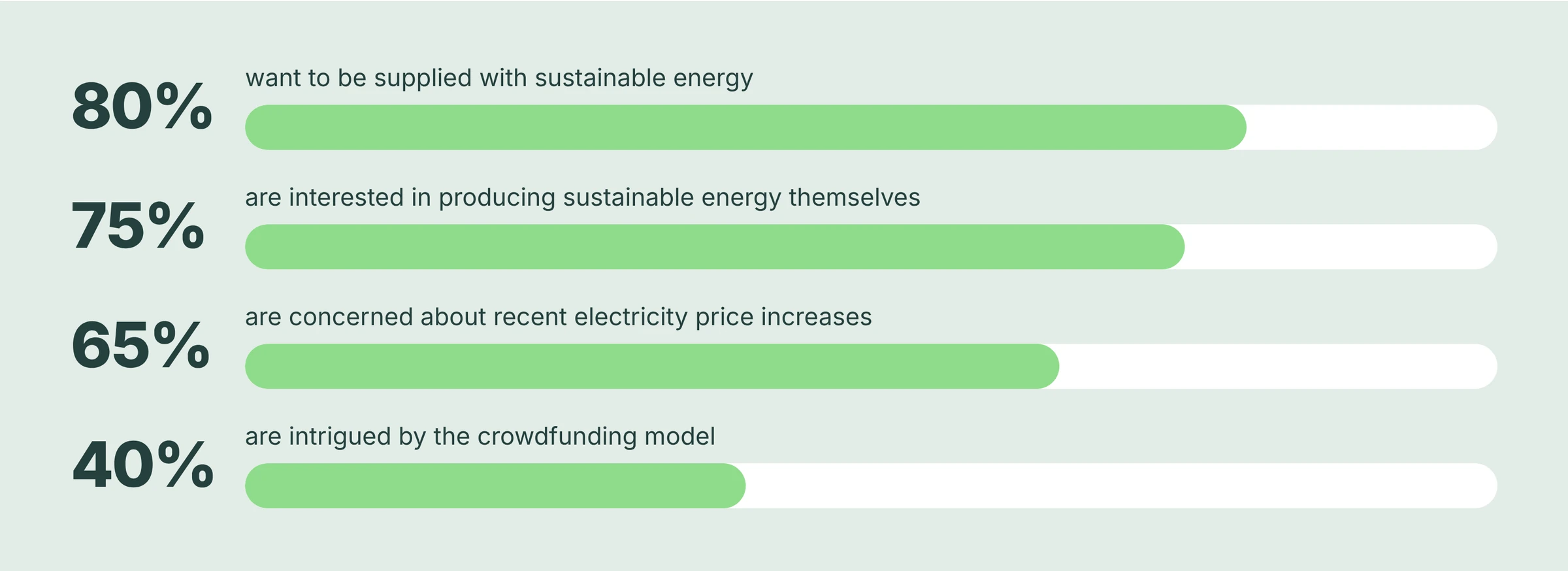
The online survey supported the idea: most people want sustainable energy, and a large share wants to produce it themselves. Fewer were curious about the crowdfunding model, which told us the model needs a clear explanation.
Define
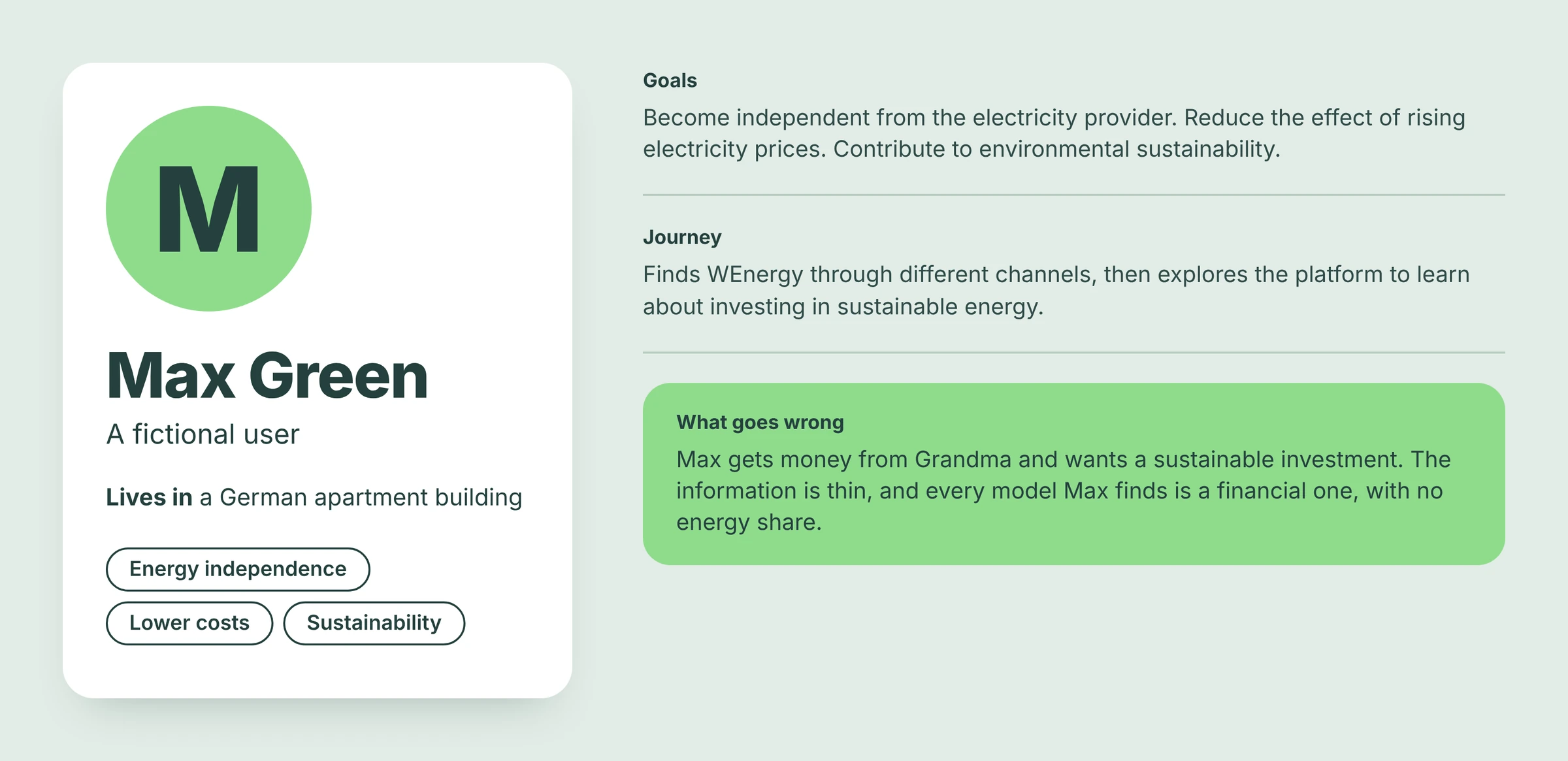
Persona: Max Green
Who the investor is, and which part of the product this case study covers.
Max Green is a fictional user who lives in a German apartment building. Max wants to become independent from the electricity provider, reduce the effect of rising prices and contribute to sustainability.
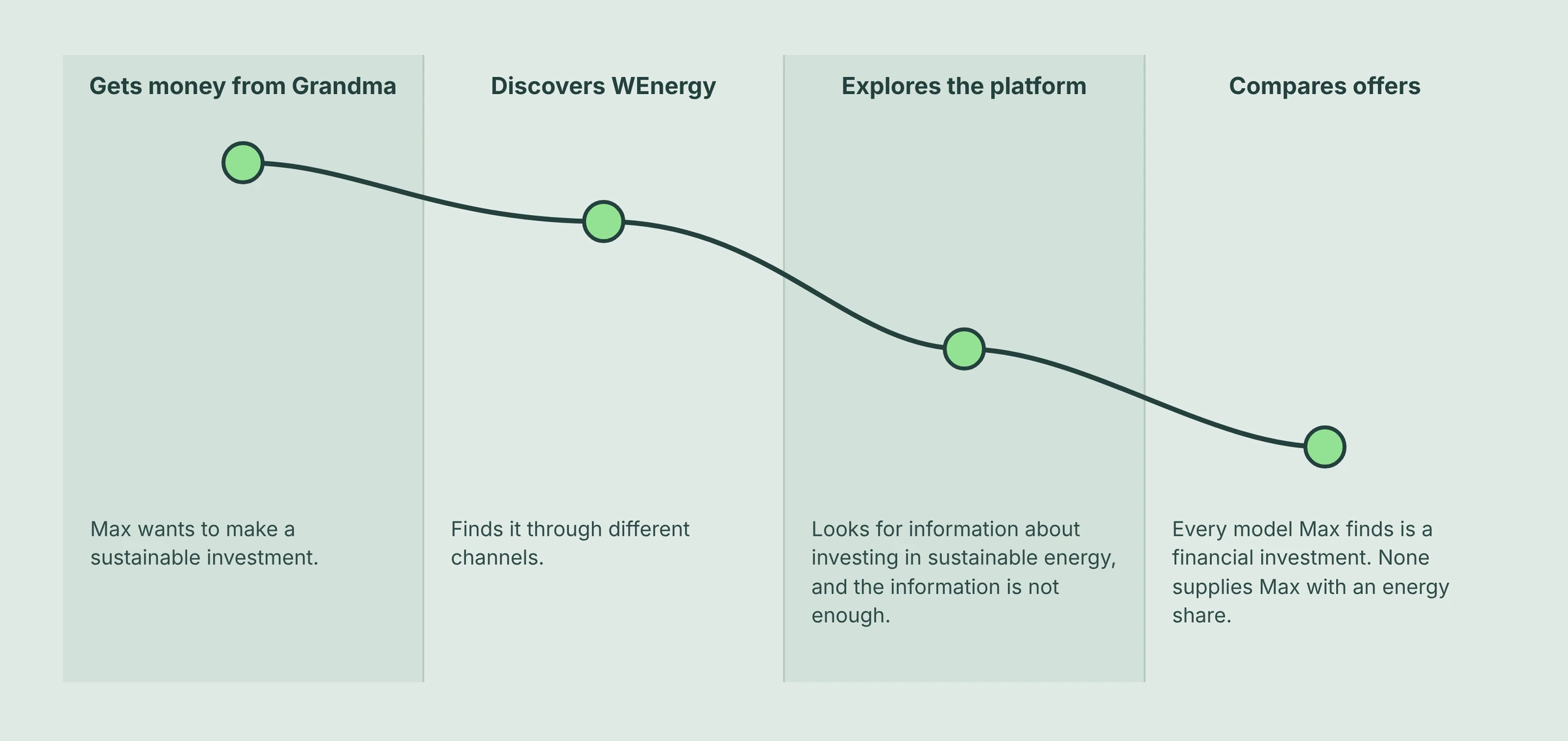
In the journey, Max gets money from Grandma and wants to make a sustainable investment. Max finds WEnergy through different channels, then explores the platform. The information along the way is not enough, and every model Max finds is a financial investment. None of them offers a share of the energy itself.
User journey
The journey follows Max in four steps: getting money from Grandma, discovering WEnergy, exploring the platform and comparing offers. Max is not happy with the information along the way, and in the end finds only financial investment models, none with an energy share.
Scope
This case study covers the scenario where users look at upcoming projects and decide whether to invest, based on the data shown.
Not in scope: the first onboarding flow, monitoring of ongoing projects, an About us page that explains the community, and user handling and administration.
Design
User flow
Wireframes, tests with the interviewees, and the look of the product.
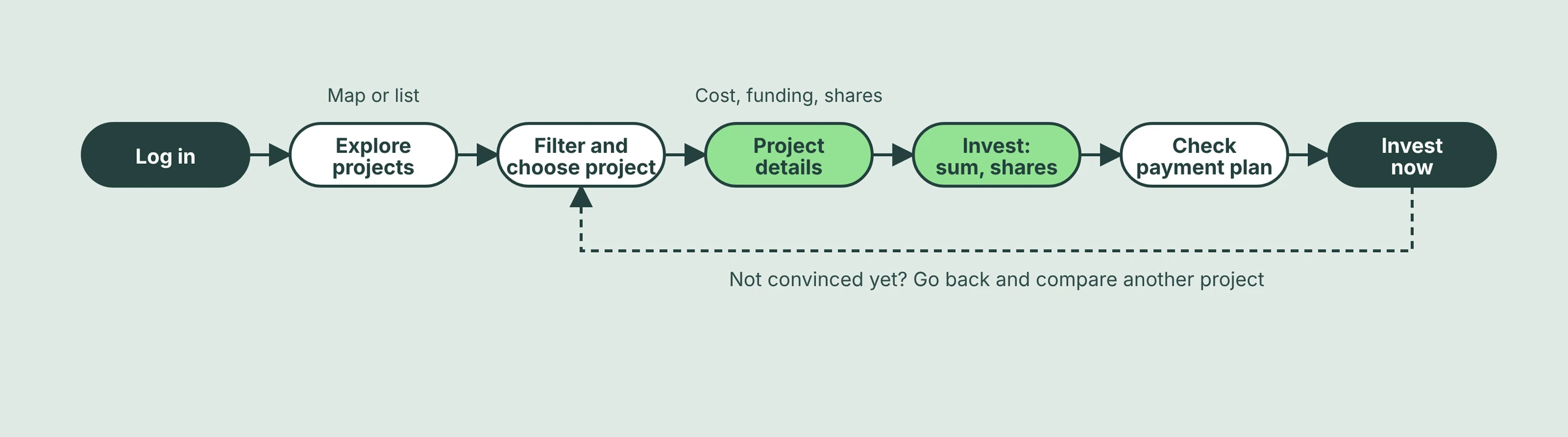
The flow for this scenario follows the screens: log in, explore the projects on a map or in a list, filter and choose a project, read its details, enter the investment sum and the number of shares, check the payment plan and invest. A user who is not convinced goes back and compares another project.
Low and mid fidelity
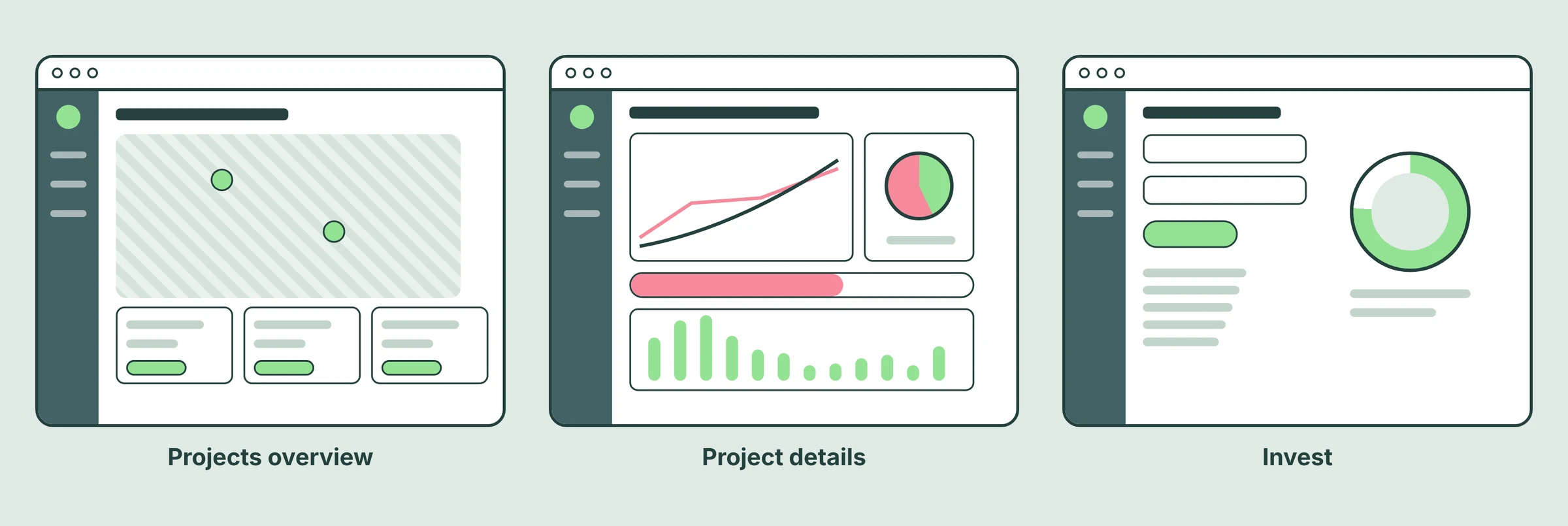
We drew low fidelity wireframes, discussed the different approaches and voted on them, then built mid fidelity wireframes from the winner.
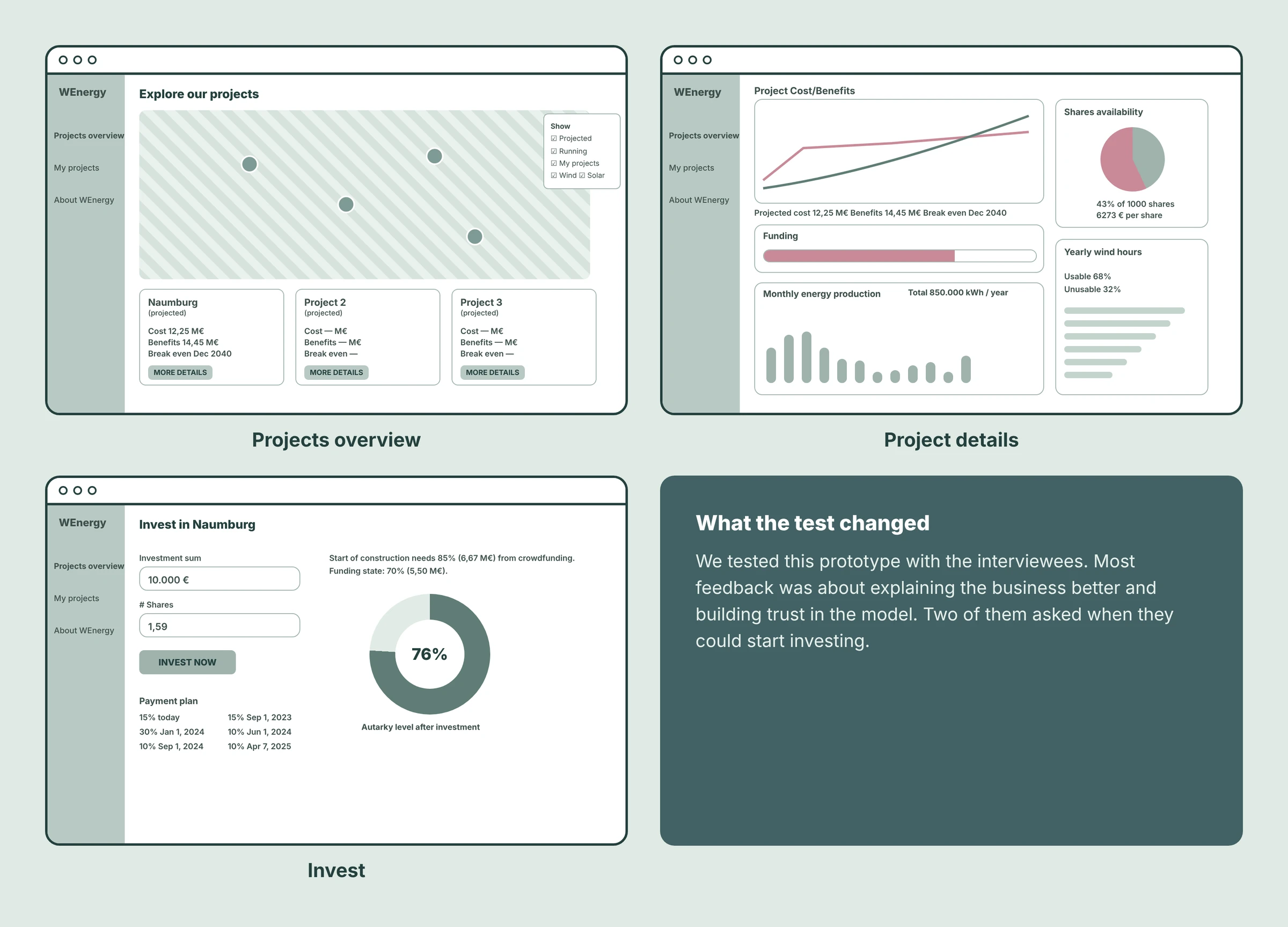
We tested the mid fidelity prototype with the people from the interviews. Most of the feedback was about explaining the business better and building trust in the model, which we worked on in the high fidelity version. Two interviewees asked when the product would be available so they could start investing.
Mood board and style guide
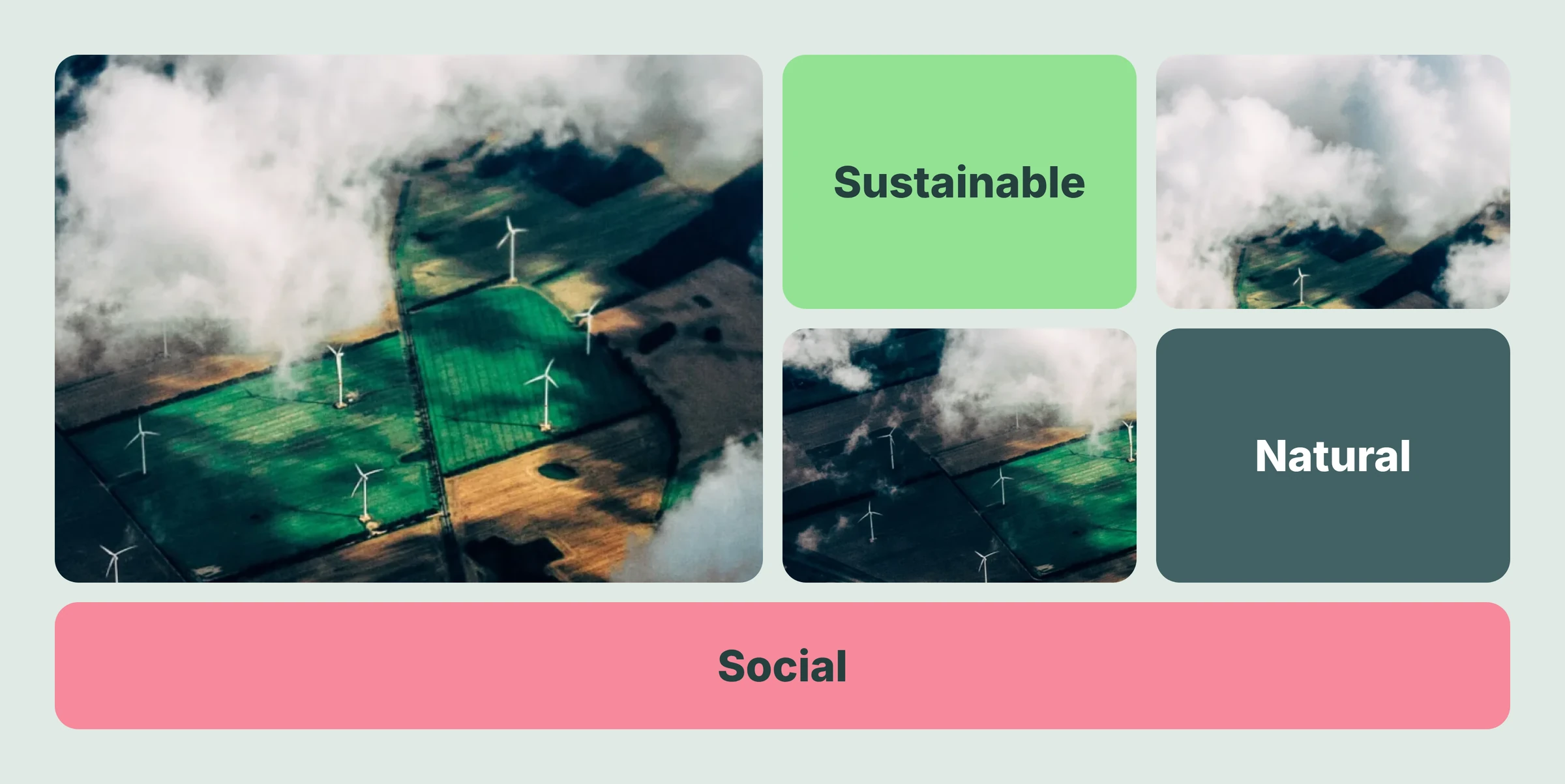
We tested the mood board with users. The results showed it expresses the three attributes we wanted: sustainable, natural and social.
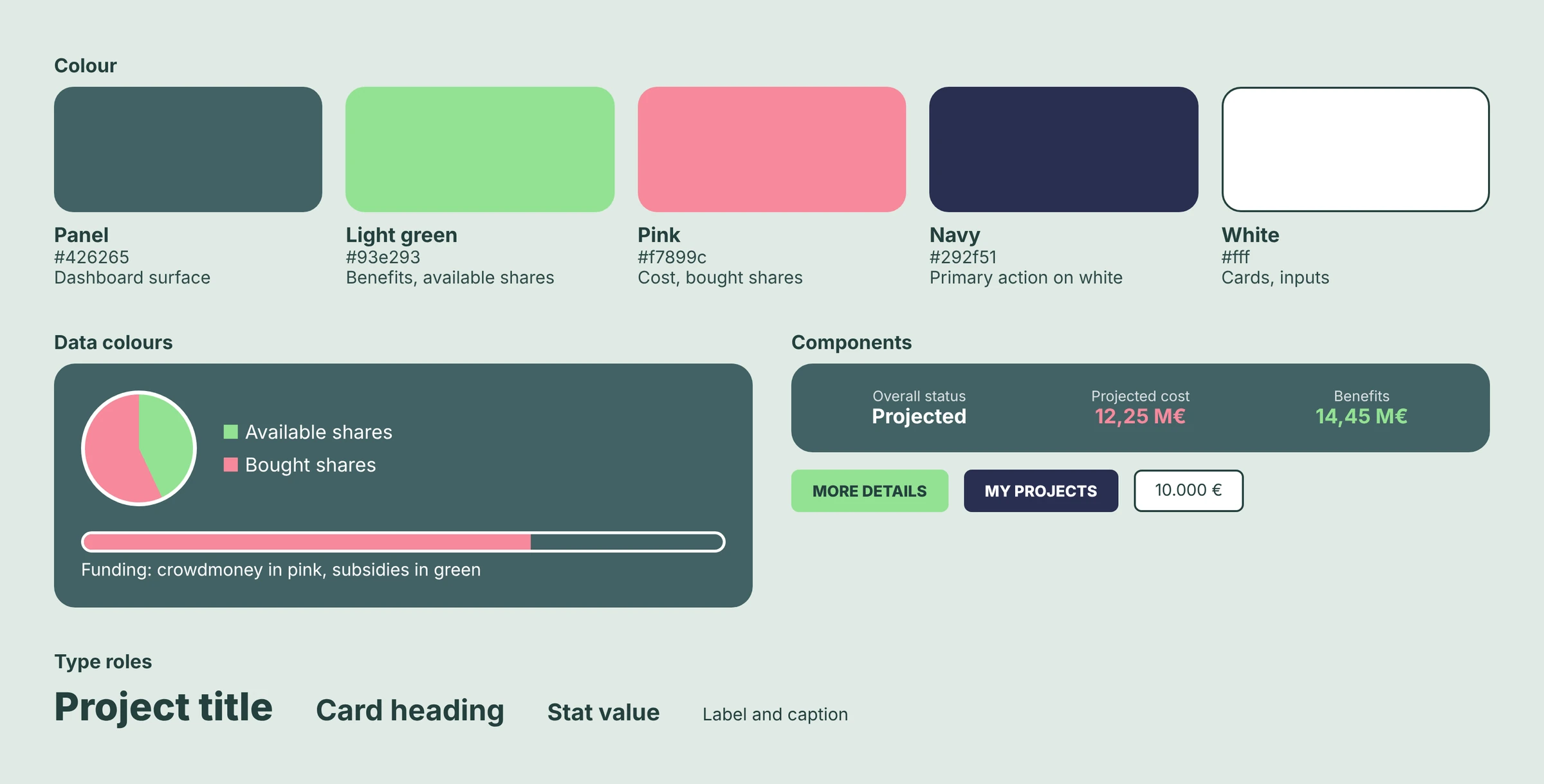
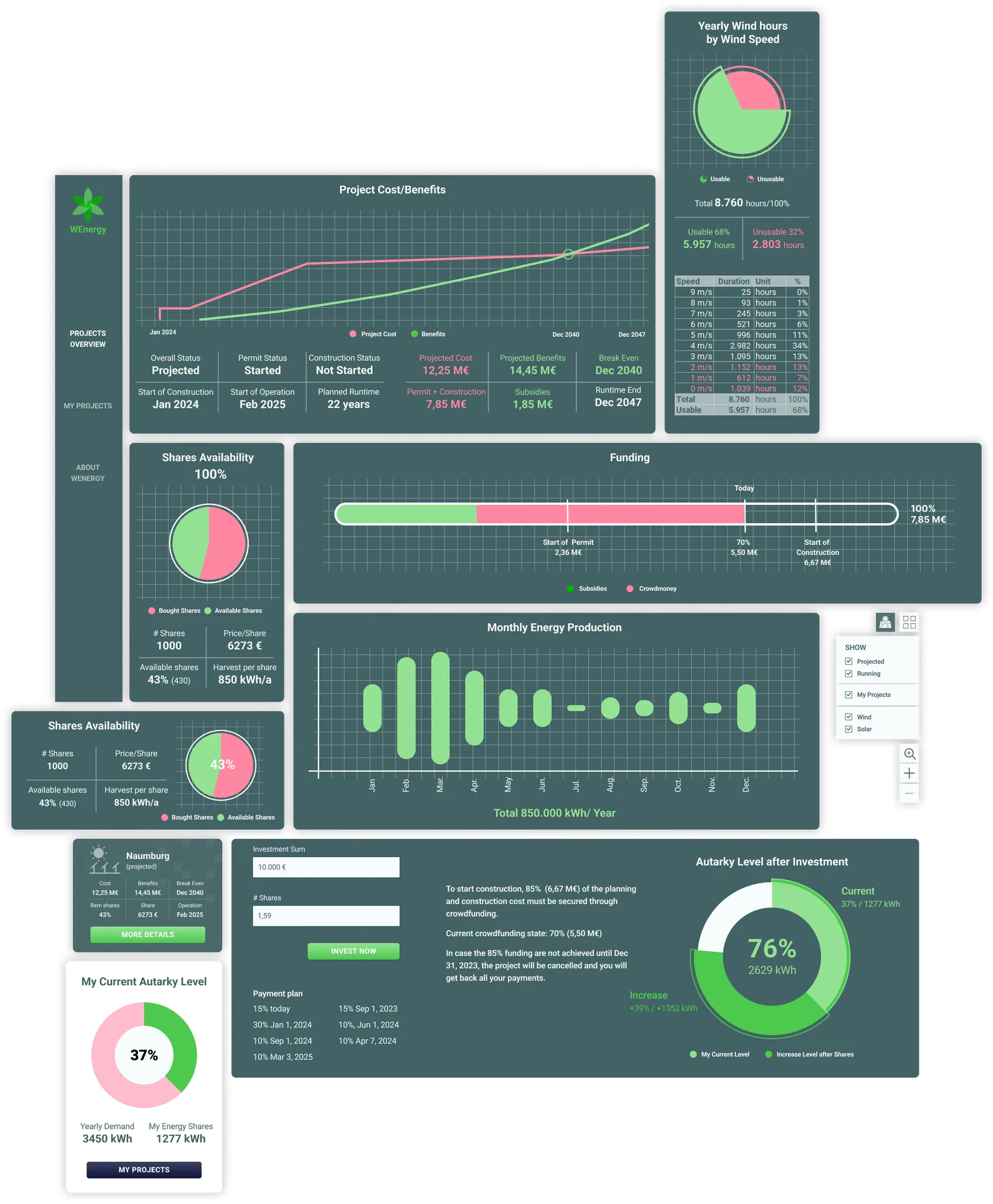
The style guide turns that into a dark green dashboard with light green and pink for data. The components cover project cost and benefits, funding, share availability, monthly energy production, wind hours, the autarky level and the invest form with a payment plan.
Deliver
The high fidelity prototype
The high fidelity dashboard and what is still open.
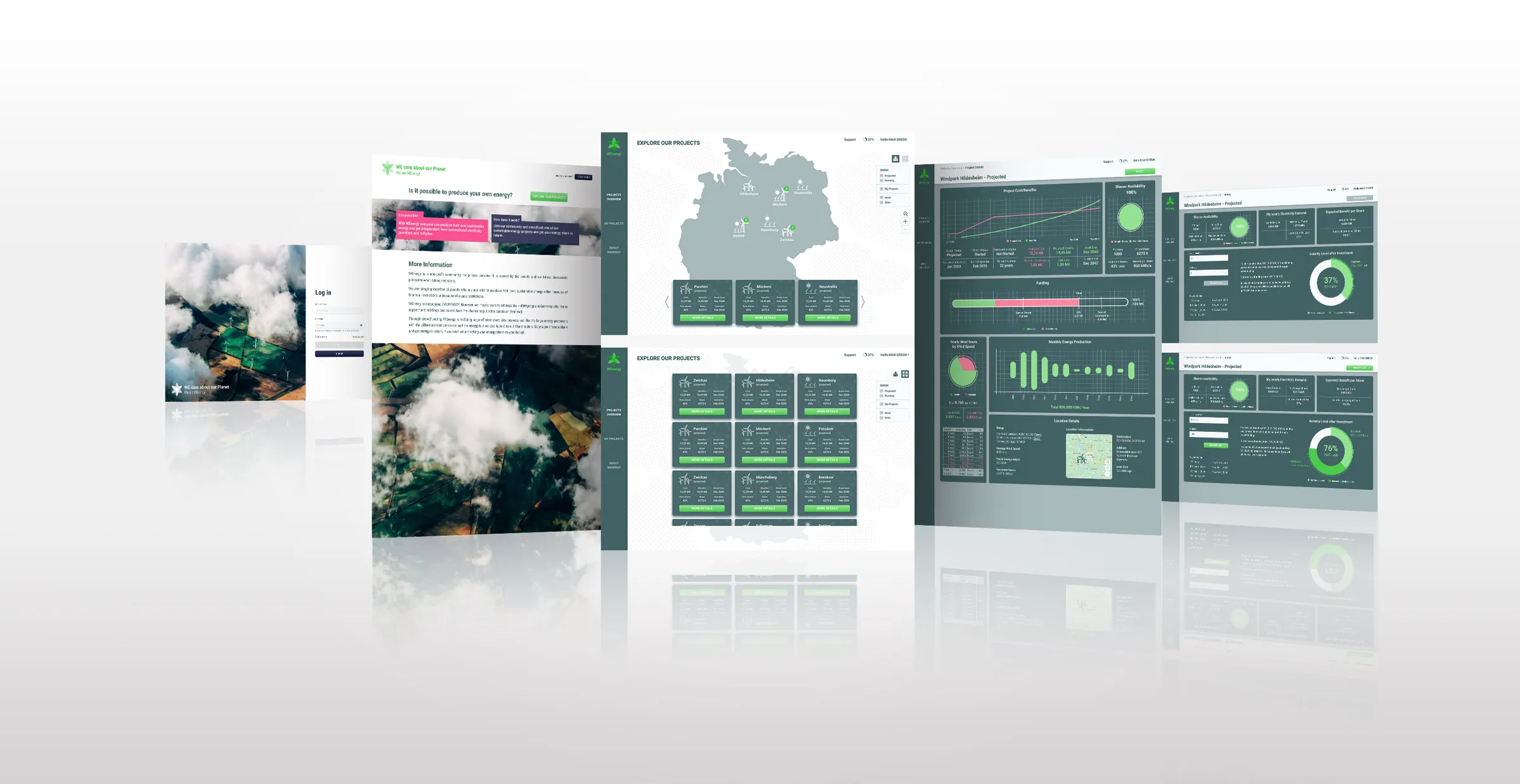
The high fidelity prototype is a web dashboard: a log in, a page that explains the idea, a map of Germany with project cards, and a detail page for each project. The interview answers about which data people need to decide went into that detail page.
Next steps
The remaining flows still have to be designed: the first onboarding flow, monitoring of ongoing projects, an About us page, and user handling and administration. For ongoing projects the detail page needs real data and a comparison of plan and actual values.